The Thrilling Connection Between Italian Cigarette Smuggling and Offshore Powerboat Racing
Discover how Italian cigarette smuggling after World War II fueled the rise of offshore powerboat racing.
Imagine speeding across the Mediterranean under the cover of night, evading authorities in a sleek, high-powered boat loaded with contraband cigarettes. This isn’t a scene from a Hollywood blockbuster—it’s a real chapter from Italy’s post-war history that gave birth to offshore powerboat racing. In this article, we’ll dive into the fascinating world of Italian cigarette smuggling and uncover how it sparked the adrenaline-fueled sport of offshore powerboat racing. Buckle up for a wild ride through history, speed, and innovation!

The Roots of Italian Cigarette Smuggling
After World War II, Italy’s economy was in tatters. Many families struggled to make ends meet, and the black market became a lifeline for survival. Cigarettes, often referred to as "bionde" (blondes) in Naples, were a hot commodity due to high taxes and import restrictions. Smuggling them offered a lucrative opportunity to revive local economies, especially in coastal regions like Naples, where former fishermen turned to this illicit trade.
By day, these men worked honest jobs, but by night, they became smugglers, crossing mountainous borders on foot to load cigarettes onto rowboats. Rowboats were quiet, helping them avoid detection, but they were slow. As demand grew, smugglers turned to the sea, leveraging Naples’ strategic position as a gateway to the Mediterranean. International waters, just six miles from shore, offered a safe haven where authorities had limited jurisdiction. This shift marked the beginning of a new era—one that demanded faster boats to outrun patrols.

The Birth of the “Blue Hulls”
To meet the need for speed, smugglers began using high-performance powerboats known as “blue hulls.” These boats were painted dark blue to blend into the night, avoiding moonlight reflection and detection by the Italian Guardia di Finanza (customs police). Typically manned by a skilled pilot and two crew members, each blue hull could carry up to 1,000 kg of cigarettes per trip.
The smuggling process was sophisticated. Small, agile powerboats would race out to a “mother boat” stationed just beyond Italian waters. These mother boats, often larger and more conspicuous, served as floating warehouses. To ensure trust, payments were made with 1,000-lire banknotes cut in half—one half given to the mother boat, the other to the powerboat crew. When the halves matched, the cigarette payload was transferred, and the mother boat distributed the goods to dealers in major cities.
Back on shore, the blue hulls were proudly displayed at docks, admired by locals who saw them as symbols of defiance and ingenuity. Boys would load the smuggled cigarettes into cars like the “Alfetta” (stripped of seats for extra space) and speed off to hidden stashes in Neapolitan neighborhoods. These street vendors sustained countless families in the post-war era, making cigarette smuggling a community-driven enterprise.
From Smuggling to Speed: The Rise of Offshore Powerboat Racing
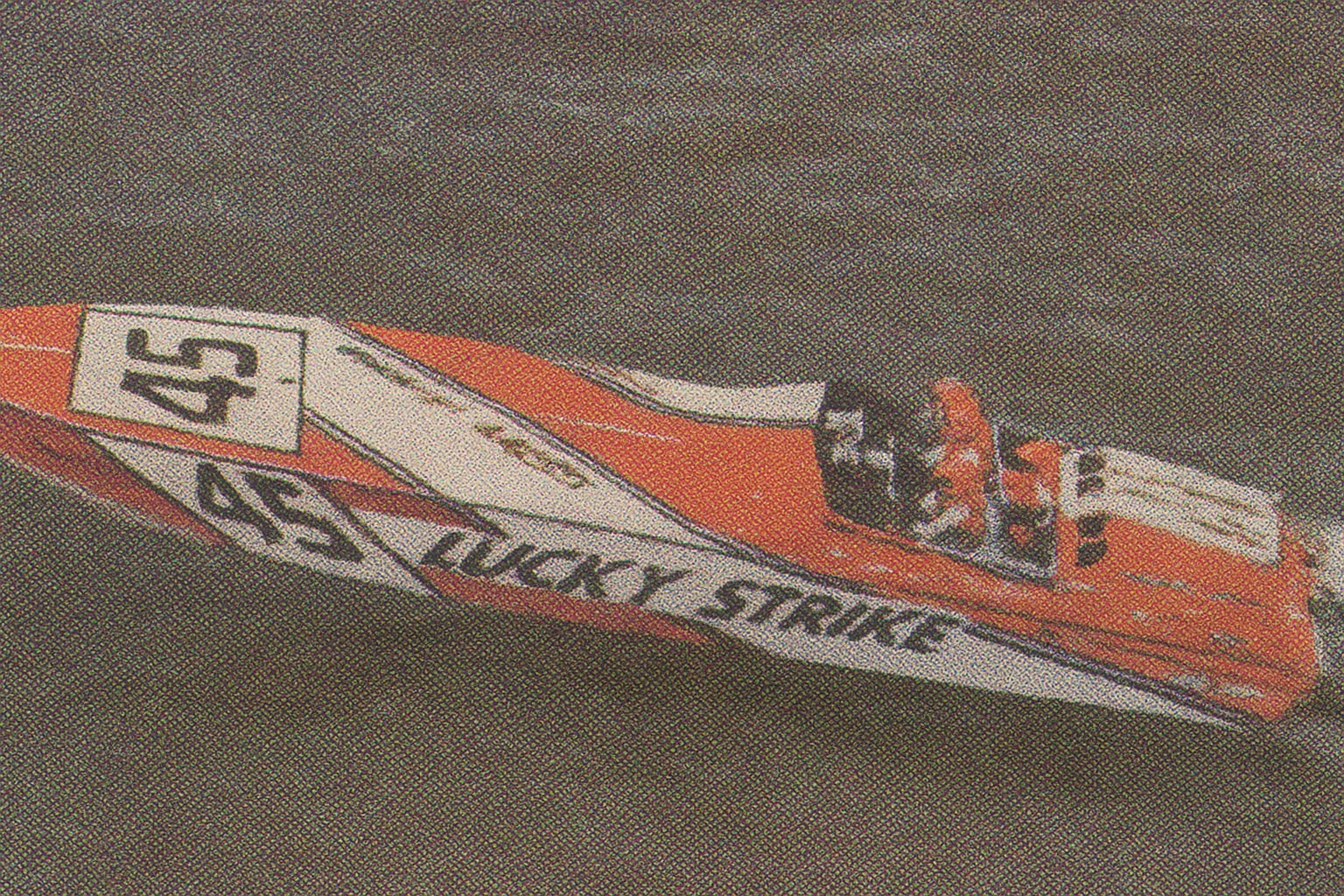
The blue hulls weren’t just tools for smuggling—they were engineering marvels designed for speed and agility. Their sleek, narrow hulls and powerful engines allowed them to outmaneuver the Guardia di Finanza’s patrol boats, leading to thrilling high-speed chases that could last hours. When caught, smugglers faced tactics like water cannons or ropes thrown into propellers, but the blue hulls often escaped, cementing their reputation as untouchable.
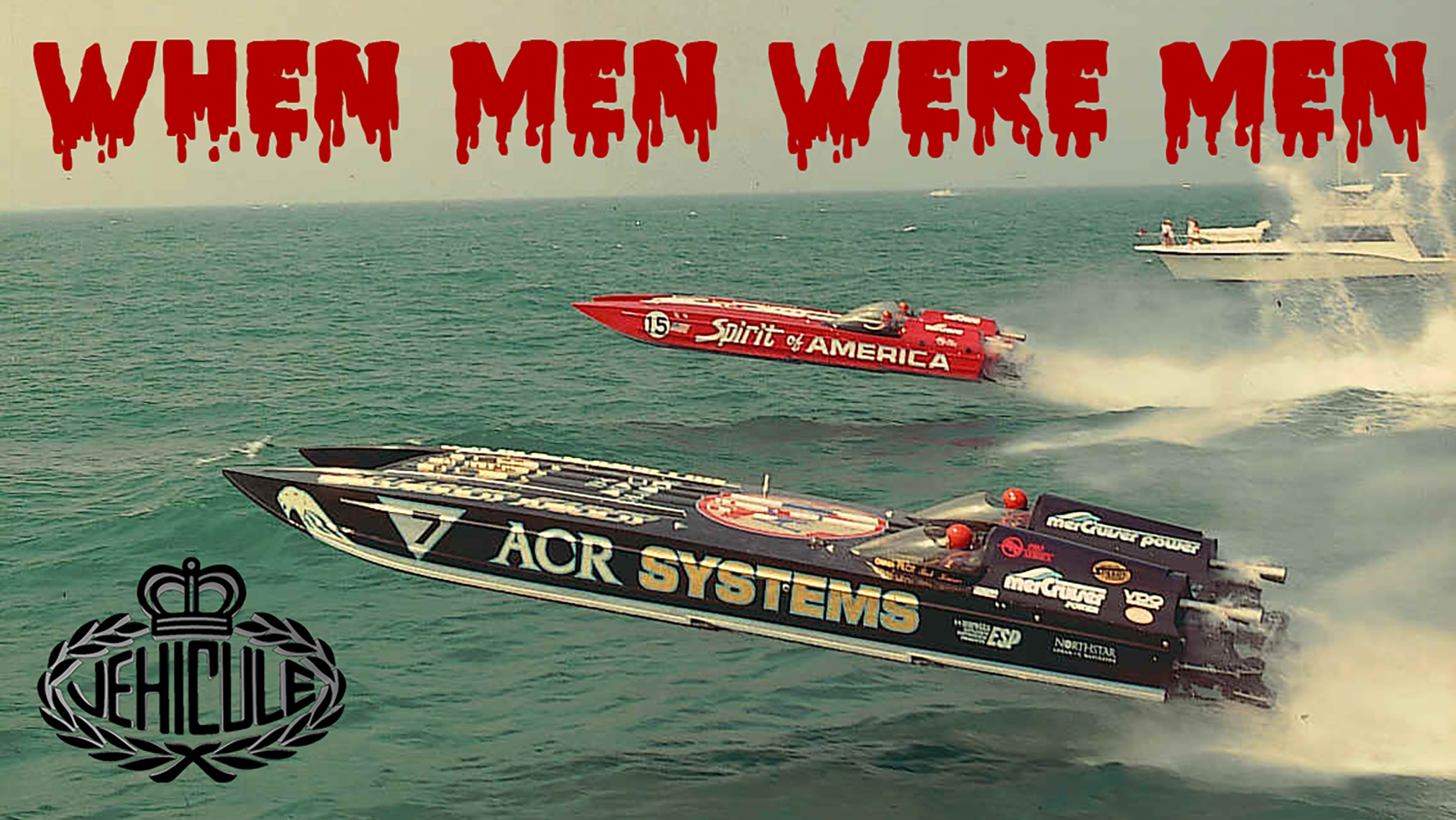
This cat-and-mouse game caught the attention of thrill-seekers and boat enthusiasts. The same qualities that made blue hulls ideal for smuggling—speed, maneuverability, and durability—made them perfect for racing. By the 1960s, the technology and designs honed by smugglers began influencing recreational boating, particularly in the United States, where offshore powerboat racing was taking shape.
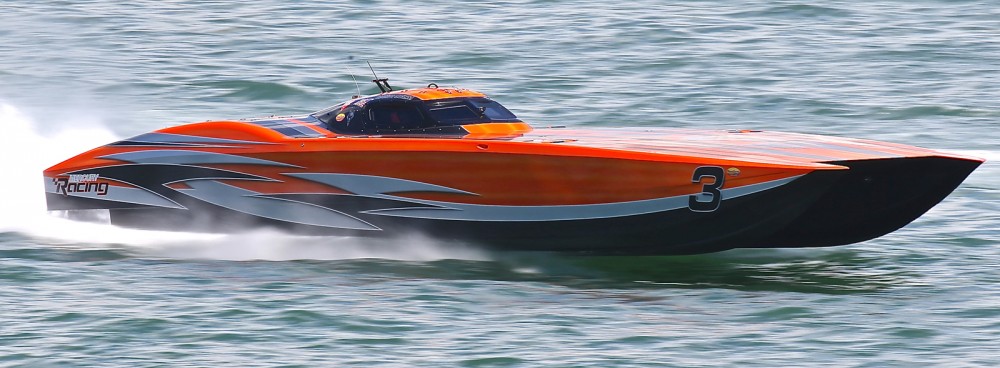
Enter Donald Aronow, an American boat designer and racer who revolutionized the sport. Inspired by the high-speed boats used in smuggling (including those in Italy and during U.S. Prohibition-era rum-running), Aronow developed the iconic “Cigarette” boat. Named after a Prohibition-era rum-running vessel from his native New York, the Cigarette featured a deep-V hull and twin engines, capable of blistering speeds. In 1969, Aronow raced a 32-foot Cigarette to a World Championship victory, solidifying the boat’s legend and the sport’s popularity.
Aronow’s designs drew heavily from the smuggling world. The long, narrow hulls and planing capabilities of his boats echoed the blue hulls’ ability to cut through choppy waters at high speeds. His Cigarette Racing Team, founded in 1970, became synonymous with offshore powerboat racing, attracting everyone from celebrities to world leaders like George H.W. Bush.

How Smuggling Shaped Offshore Racing Culture
The connection between smuggling and offshore powerboat racing goes beyond boat design. The outlaw image of smugglers—daring, rebellious, and fearless—became a core part of the sport’s allure. In the 1970s, offshore racing was a gritty, high-stakes endeavor, often described as the “golden era” when anyone with a fast boat and nerves of steel could compete.
However, the sport’s ties to smuggling also brought controversy. In the 1980s, as drug trafficking surged in South Florida, many racers, including some prominent figures, were linked to cocaine smuggling. The same Cigarette boats that dominated racecourses were used to ferry drugs across the Caribbean, leading to a crackdown by authorities. Even Aronow himself was implicated in the drug trade, and his 1987 murder in Miami—linked to a business dispute with a smuggler—added to the sport’s notorious reputation.
Despite these challenges, offshore powerboat racing thrived. The sport evolved with technological advancements, such as stepped hulls and glass-reinforced polymer designs, many of which traced their roots to the innovations of smugglers. Today, events like the Key West Poker Run and the Class 1 World Powerboat Championship continue to showcase the speed and spectacle that began with Italy’s blue hulls.

The Legacy of Italy’s Smuggling Boats
Italian cigarette smuggling wasn’t just a footnote in history—it was a catalyst for one of the most exhilarating sports on water. The blue hulls of Naples, born out of necessity in a war-torn economy, laid the groundwork for the high-performance boats that define offshore powerboat racing. Their influence is seen in every sleek hull slicing through the waves, every roaring engine pushing the limits of speed.
While the smuggling trade has faded, its legacy lives on in the spirit of rebellion and innovation that fuels the sport. From the moonlit chases of the Mediterranean to the sun-soaked racecourses of Miami, the story of Italian cigarette smuggling reminds us that sometimes, the pursuit of survival can spark something extraordinary.Learn more about the history of offshore powerboat racing in VÉHICULE.